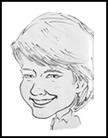
By all accounts, JEANNIE SEELY
seemed to have her affairs in order well before her unexpected
death. So it's a bit of a surprise that her will was probated
when a revocable living trust could have kept her most personal
information away from prying eyes.
****
DOUG VINCENT
calls our attention to ''a show about suicide, hope and
healing.'' The playwright/performer based The Heart of Grace on
Doug's ''relationship with his troubled father, which pours out of him
the hopeful night of his daughter GRACE's uncertain birth. CLAY ROSE from the Gasoline Lollipops shares the stage with Doug.
''Clay's fifteen musical members serve as the play's emotional
touchstone, enthralling Greek chorus and riveting denouement'' while
''Grammy-
nominated AMYTHYST KIAH will perform a set before the show and then sing multiple songs written for the show as a special guest.''
Mark your calendars for March 5, 2026 for the one-night-only event at The Down Home,
300 West Main Street, Johnson City, Tennessee. Doors open at 6:00
p.m. Showtime is 7:30 p.m. Tickets are $20 and are
available @ thedownhome.com (with a portion of the proceeds earmarked
for The Trevor Project).
The play is R-Rated ''for language'' and ''potentially triggering material.'' Contact Doug with any questions at 303-594-0852.
Vincent knows of what he writes: Referencing Kiah he indicates ''We both lost a parent at age 17 to suicide.''
CLIF DOYLE reminds me that it has been five years since ''STACY'S MUSIC ROW REPORT listed [SEAN HARRISON's] album Halfway from Nashville as a 'must listen' record." Clif adds that the Americana troubadour released Ghastly Love (and Other Dubious Tales) earlier this year and we agree that it merits 2025 a year-end mention.
****
As 2025 draws to a close we are reminded of two deaths in the extended Music Row family earlier this year that you may have missed: On June 22, 2025 CHARLIE CHASE (a comedy lover who, after a slight change in spelling, adopted his moniker in tribute to the famed silver screen comedic actor and director christened CHARLES JOSEPH PARROTT) lost his wife, KAREN.
A little less than four months later, on October 20, 2025, BILL CODY (a history buff who adopted his moniker in tribute to the western hero) and his wife, REBECCA lost their son, LEVI.
****
Not to be confused with TAYLOR SWIFT's recording of "Nashville (AKA "Going Back to Nashville")"), JAMES REYNE has released a video of "Going Back to Nashville". Reyne's TONY JOE WHITE-inspired lyrics namechecks White and such other country-music luminaries as JERRY JEFF WALKER, TOM T. HALL, TAMMY WYNETTE, GEORGE JONES, DOLLY PARTON and PORTER WAGONER.
****
Bluegrass musicians looking for a full-time gig at Knott's Berry Farm paying $25 an hour can find more information and apply here.
****
From the Not Exactly Country Music Dynasty Department: Country fans who read the credits in those days knew BILL BURCH as director of the TENNESSEE ERNIE FORD Show or perhaps for Burch's earlier work as producer of GENE AUTRY's Melody Ranch.
Another of Burch's claims to fame was hiring the THE BLUE JEANS, Autry's backup singers. The trio were sisters- ALYCE, YVONNE and MARILYN- who along with three other singing sisters alternated as members of the siblings group better-known as the KING SISTERS- though King was never their given surname. (Daughters of PEARL and WILLIAM KING DRIGGS, I guess ''The Driggs Sisters" just wouldn't cut it.)
BUDDY COLE (whose given name was EDWIN LeMAR COLE),
married to, but legally separated from Yvonne King at the time, played
piano on Autry's New York radio show. Following Buddy and
"Vonnie"'s 1953 divorce, Buddy remarried as did
Yvonne some years later.
Vonnie's second husband? None other than Bill Burch, her husband from 1966 until his passing in 2005.
But wait. There's more: By the time of Yvonne and Bill's marriage, THE KING SISTERS' expanding Mormon families became known to a new generation of television viewers as THE KING FAMILY, courtesy of the ABC-TV Show (debuting in 1965) of the same name. Thus, the KING COUSINS became TV recording stars and one of them, TINA COLE went on to star as "Katie" on the long-runnings TV comedy series, My Three Sons.
****
Songwriters:
Want to help and/or looking for "real (or potentially "reel") life"
inspiration for a country song? Look no further than here.
****
A Jewsic City "Shabbat dinner and musical kabbalat Shabbat with Nashville's Jewsic City,
a non-traditional, unplugged musical prayer experience, weaving
traditional, contemporary, and secular melodies supported by guitar and
other instruments" await those who RSVP for the November 14, 2025 Nashville Hadassah-sponsored event.
"Please feel free to bring an instrument to jam along, or a drink or
desert item to share." More information and tickets available here.".
****
NICOLE MARY KIDMAN (as KEITH URBAN's soon-to-be ex-wife is known to presiding Davidson County Fourth Circuit Court Judge STEPHANIE WILLIAMS), enlisted two attorneys (the mother-daughter team of MARLENE ESKIND MOSES and MARISSA MOSES RUSS) when the actress filed for divorce from the singer on September 30, 2025.
Keith, who is repped by DALLAS PAGE KELLEY III,
and Nicole had already agreed upon and signed a marital dissolution document,
along with a parenting plan and child support worksheet presented to
the court in a same-day filing. The filing also coincided with a
temporary injunction and court-sealed ''divorce statistical
information" as well as court Order that Urban and Kidman attend a
"parenting seminar."
JOE BUCHANAN's latest album, Heaven and Earth,
is a treat for those who share Joe's philosophy: "Be good to each
other, tread gently in the lives of others, and remember to sing.".
****
LUKE COMBS has generated enormous income for himself and his
associates. Now there is similar opportunity for those who want
an investor's share of the royalties from Luke's RIAA-certified
Diamond-selling "She Got the Best of Me."
"This catalog includes the songwriters' share of public performance
royalties earned outside of the U.S.'' Following initial
"modestly, steadily, but unassumingly" growing earnings, a "breakout
moment'' occurred "by Year 4, earning surged by 113.82%... "The
catalog's five-year trajectory'' evinces "enduring demand across
formats'' and earnings that "climbed from $4,067 to $16,453, delivering
a remarkable 41.82% compound annual growth rate.''
If you're interested in seeing that CAGR work for you, click here.
****
JOE DON ROONEY's divorce from TIFFANY FALLON,
granted on grounds of (mutual) inappropriate marital conduct, may seem
like old news. However, since 2023 (two years after
Joe Don filed) issues between the couple have apparently remained,
necessitating, until recently, ongoing intervention from the Davidson County Circuit Court.
After the Court received checks backing up the financials (some
financial information continues to remain under seal) and ruled on a
property sale, ROSE PALERMO (Rooney's lawyer) and Fallon's attorneys (KRISTEN BOSWELL AMONETTE and JOSHUA VOLTAIRE LINDSEY) turned their attention to Tiffany's Petition to Modify Child Support. Rooney wanted the Motion dismissed.
After the presentation of exhibits, requests for additional discovery,
a Motion in Opposition to Dismiss, a Renewed Motion to Dismiss,
granting of a Continuance and other delays, the Court ruled that Joe
Don was paying sufficient child support, dismissing Tiffany's
modification request.
With the end of Summer, 2025 the divorce was (redundantly?) ruled
final ("closed case") with Tiffany being ordered to "pay all costs"
associated with her futile effort to modify Joe Don's child support
obligation.
RICHARD STERBAN's pancreatic cancer diagnosis makes THE OAK RIDGE BOYS' bass singer the latest music industry member of a club no one wants to join.
Sterban's diagnosis in March, 2025, a month before his 82nd birthday (the average diagnosis comes at age 70)
makes him one of more than 67,000 Americans expected to be diagnosed
with the U.S.'s 10th most commonly diagnosed form of cancer (or over
184 Americans per day) in 2025.
Still,
the current five-year survival rate of 13% (more than double in recent
years what it once was) gives Richard better prospects than WEBB PIERCE, RAY PRICE, FELICE BRYANT, CHARLIE LOUVIN, HANK COCHRAN, D'ANGELO, ARETHA FRANKLIN, LUCIANO PAVAROTTI, QUINCY JONES, SANDY MASON, HENRY MANCINI, ROGER WILLIAMS, ALAN WEBB, JAY LEE WEBB, DIZZY GILLESPIE, LARRY FULLAM, BARBARA (Mrs. ROY) ORBISON, BRUCE OSBON, COUNT BASIE, MERLIN LITTLEFIELD, BUDDY KILLEN, SYD BARRETT, ARIF MARDIN, FREDERICK "FRED" WILHELMS III, GARY McSPADDEN, JOE CARTER, DAN STORPER and STEVE GULLEY.
Another short list of the prominent who succumbed to pancreatic malignancy includes MICHAEL LANDON, PERNELL ROBERTS, PATRICK SWAYZE, Supreme Court Justice RUTH BADER GINSBURG, Senator HARRY REID, JR., JACK BENNY, DONNA REED, VINCE EDWARDS, DONNA DOUGLAS, ART FLEMING, ALEX TREBEK,
SALLY RIDE, FIORELLO LaGUARDIA, FRED GWYNNE, BEN GAZZARA, REX HARRISON, DON HEWITT, JERRY SPRINGER, ANNA MAGNANI, HARVE PRESNELL, ALICE PLAYTEN, WILLIAM SAFIRE,
STEVE JOBS, HOWARD FINEMAN, MELVIN BELLI, ANNE FRANCIS, MARK GOODSON, MURRAY KEMPTON, MIKE DEAVER, DRAKE HOGESTAN, DITH PRAN, WILLYE WHITE, PAUL TEAL, CHARLES REVSON, VIRGINIA
KOMANDO, L. PATRICK GRAY III and Judge FRANK CAPRIO.
If research funding cuts are not restored, because (unlike the majority
of those who have other forms of cancer) most who receive a pancreatic
cancer diagnosis are asymptomatic until they reach stage four and are inoperable, metastatic or both, pancreatic
cancer, now the third most common cause of cancer-related deaths,
threatens to become the second leading cause of cancer by 2030.
For more information about risk factors, symptoms and how you can help fund a cure, click here or call 877-272-6226.
Contentious gray divorce has hit Music Row and, as always, you're reading about it here first. Country Music Hall of Fame member BRENDA LEE who, at age 80, began the process of ending her marriage to CHARLES RONALD (RONNIE) SHACKLETT with
a January 28, 2025 filing a little less than three months to the day of
the couple's 62nd wedding anniversary. (Shacklett is
contesting the divorce.)
I'm
laying out the specifics as I understand them as of June 2, 2025 with
exclusive updates and, if need be, corrections to come as
necessary (I am not an attorney), which you'll probably see in
greater detail once the tabloids and respected news organizations
(which are averse to crediting me for breaking stories)
catch on, but the litigation apparently began with Brenda's petition
which was sealed the same day it was filed, thanks to her request of Judge STEPHANIE WILLIAMS.
(Judge Williams could have suggested just redacting certain portions of
the public record had she not felt that Brenda showed cause.)
Just as in the BILL IVEY scandal,
sealing records limits public access. (Journalists, as well as other
citizens, can petition courts to unseal records.) In Tennessee,
divorce records are generally confidential but they become public after
50 years.
That same day, January 28, 2025, a temporary
injunction and restraining order were granted (the latter is often
merely procedural and in those instances should be free of inference),
followed a summons and, the following day yet another summons and a
show cause Order.
Ronnie was apparently served with a summons on
January 31, 2025 and by February 3, 2025 he had lawyered up with a
Notice of Appearance submitted that day.
On February 4, 2025 an
Agreed Order was submitted to the court re: an ex parte Temporary
Restraining Order. Judge Williams had the TRO stricken and an
Agreed Order was submitted to reset the hearing for the TRO.
On February 5, 2025 the parties (Brenda, through her attorneys ROSE PALERMO and JASON TALLEY, Ronnie through his attorneys JAMES WEATHERLY, JR. and JACQUELINE DIXON), submitted another Agreed Order which Judge Williams granted as well as a Motion for Continuance of the trial.
On
February 21, 2025 the proceedings apparently resumed with the first
witness subpoenaed, along with Ronnie's response, answer &
countercomplaint. That same day exhibits and an affidavit were
filed along with an "emergency" Motion for a temporary restraining
order with an order to appear and show cause while NHC Healthcare of Franklin was issued a subpoena for medical records.
On
February 24, 2025 Judge Williams denied the Motion for a temporary
restraining order and order to appear and show cause submitted three
days earlier.
On February 27, 2025 a Motion was filed re:
approval of the sale of real property with apparently another Motion
the following day re: approval of the sale of Brenda's real property to
be heard on March 14, 2025.
On March 4, 2025 Brenda's answer to Ronnie's countercomplaint was filed.
On March 11, 2025 NHC Place Cool Springs was
issued a subpoena. That same date Ronnie filed a response in opposition
to the sale of Brenda's real property. An amendment to the Motion
to approve the sale was also filed along with exhibits.
On March 13, Ascension St. Thomas West was
issued a medical records subpoena and an Agreed Order was submitted re:
resetting the hearing of a Motion to sell the "marital residence" to
March 21, 2025 at 9 a.m. Another Agreed Order was submitted that
would continue the hearing on the ex parte Motion for a temporary
restraining order until a hearing on May 15, 2025 at 9 a.m. The
"emergency" continuance was granted.
On March 14, Motions for
continuance of the Motions re: approval of the sale of real property
and the amendment to the sale of Brenda's real property were submitted
that would set each for hearing on March 21, 2025.
On March 17, 2025 the court approved the two Agreed Orders of three days earlier.
The March 21, 2025 proceedings were highlighted by "TRIAL EXHIBIT AS 1 EXHIBIT IN 1 BROWN ENVELOPE."
On March 25, 2025 Brenda apparently filed an Response in the form of an objection to Ronnie's issuing a duces tecum subpoena.
That same day Ronnie responded with a Motion to Quash "subpoena duces
tecum and/or Motion for Protective Order" to be heard on April 25, 2025.
On
March 27, 2025, as transcripts and exhibits were filed, Ronnie filed
his Response in opposition to Brenda's Motion to approve the sale of
her real property.
An April 1, 2025 the Court agreed to hear
Ronnie's Motion to Quash on April 25, 2025 as Ronnie
submitted his Response in the form of an objection to Brenda's subpoena duces tecum.
On
April 7, 2025 Judge Williams apparently issued an Order indicating she
would soon rule on the Motion to approve the sale of real property.
On
April 16, 2025 Brenda filed a Motion to "allow testimony by
contemporaneous audio-visual transmission" to be heard on May 2, 2025.
On April 22, 2025 Ronnie filed his Response to Brenda's "Motion to Quash and/or Motion for Protective Order."
On
April 24, 2025 An Agreed Order in the form of a Protective Order was
submitted. Brenda also submitted an Agreed Order re: her
"objections and Motions to Quash.''
On April 25, 2025 Judge Williams signed the Agreed Protective Order and an Agreed Order was submitted re: Ascension St. Thomas and NHC producing medical records.
On
April 29, 2025 Ronnie submitted a Motion in opposition to Brenda's
Motion to allow testimony by contemporaneous A/V transmission.
On May 1, 2025 an Agreed Order was submitted to continue Ronnie's Motion of two days earlier until May 30, 2025.
On May 2, 2025 Judge Williams signed the Agreed Order submitted for her approval the day before and a Notice of Hearing was set.
On
May 7, 2025 an Agreed Order was submitted to continue the hearing set
for May 15, 2025 and Judge Williams agreed to a continuance setting the
hearing for August 7, 2025 at 9 a.m. at which time Ronnie's "emergency"
TRO Motion will also be heard.
On May 30, 2025 Ronnie submitted a Notice of filing St.Thomas West medical records.
On June 10, 2025 An Order was issued granting Brenda's Motion to testify via Zoom.
On June 20, 2025 Ronnie's attorneys issued a subpoena for TODD MOORE.
On July 3, 2025 Brenda's attorneys issued a subpoena
for Moore.
On August 1, 2025 An Agreed Order was submitted re: Ronnie's "emergency" TRO Motion.
On August 6, 2025 An Agreed Order to resolve the ex-parte temporary restraining order entered on January 29, 2025 was issued.
On
September 3, 2025 a perhaps impatient Judge Williams initiated a
Domestic Case Management Order and scheduled an October 2, 2025 status
hearing.
On September 4, 2025 Ronnie's legal team filed an "Emergency
Motion calling for an "examination of wife," scheduled to be heard on
September 26, 2025.
On September 11, 2025 Ronnie filed an Affidavit (apparently in support
of his September 4, 2025 Motion). That same day one of the Shackletts' children (whose name I am withholding for reasons I will
explain in due course) also filed an Affidavit that, unlike Ronnie's, is under seal.
On September 22, 2025 Brenda's legal team filed a Response to
"Defendant's Emergency Motion for a TRCP Rule 35 Exam" along with
exhibits in support of the Response, all of which are under seal.
On September 25, 2025 a Notice of Hearing set the date for Ronnie's
Emergency Motion for a TRCP Rule 35 Exam of Brenda to be heard (October
24, 2025).
On October 1, 2025 an Agreed Order to reset the scheduled October 2, 2025 status conference was submitted.
On October 2, 2025 a Continuance was requested to reset the date of the status conference to December 4, 2025.
On October 7, 2025 the Court's "Order to Set Domestic Case" status conference for December 4, 2025 was entered.
On October 23, 2025 the next-day hearing on Ronnie's Emergency Motion
for a TRCP Rule 35 Exam of Brenda was rescheduled for November 21, 2025.
On October 24, 2025 the Court entertained three Motions: the first
represented Ronnie's team's citation of Tennessee Rules of Civil
Procedure Rule 43 (Evidence) with respect to allowing Brenda's being
allowed to testify "by contemporaneous audio-visual transmission."
The second was Brenda's team's Motion to "allow wife's testimony by
contemporaneous audio-visual transmission." The third was
Brenda's Motion "to Order parties to attend Mediation." All three
Motions are set to be heard on November 14, 2025 in advance of Ronnie's November 21, 2025 Emergency Motion
for a TRCP Rule 35 Exam of Brenda and the status conference currently set for December 4, 2025.
On November 13, 2025 an Agreed Order was submitted re: the next day hearing.
On November 17, 2025 an Agreed Order was approved allowing for both parties to ''testify" via "contemporaneous audio-visual transmission" at a November 21, 2025 hearing on the Emergency Motion
for a TRCP Rule 35 Exam of Brenda.
On November 21, 2025 a Continuance was granted and the scheduled
"Emergency" hearing "for a TRCP Rule 35 Examination of Wife" was
rescheduled for January 30, 2026.
On December 4, 2025 a Continuance was granted and the scheduled status conference was rescheduled for March 26, 2026.
On December 5, 2025 an Order was issued appointing a Guardian Ad Litem.
.
****
Thanks to TAYLOR VAUGHN for the invite to JONAH KAGAN's February 12, 2026 appearance at The Basement East.
... to powerHouse Books and Prestel Publishing for the invitation to ''the book launch of Prospect Park by JAMES SHABAZZ in conversation with NOELLE THÉARD, senior photo editor at the New Yorker'' December 13, 2025 at Powerhouse's 8th Avenue, Brooklyn, New York headquarters.
... to STEPHANIE SEIPLE and the ''MMC Team'' for the request to join them ('We want your voice at the table) November 18, 2025 the MusicMedia Collective's Town Hall: The Decline of Music Media and Its Ripple Effect.
...to TAYLOR VAUGHN for the invitation to NOAH FLOERSH's November 3, 2025 appearance at The Basement East.
...to DOUG HALL for inviting me to TRAVIS BOLT's October 27, 2025 appearance at Whiskey Jam and GHOST HOUNDS' October 14, 2025 Grand Ole Opry debut performance.
... to PETE MANISCALCO for a special invitation to attend the October 20, 2025 advance screening of Springsteen: Deliver Me From Nowhere at Green Hills' Regal Cinema.
Invitees were issued arm bands that scored gratis popcorn and drinks
during the prescreening hosted and featuring introductory remarks
by WARREN ZANES. Following the Oscar buzz-worthy flick, guests were directed a few doors down to the post-screening reception at Emmy Squared Pizza capping off a memorable evening for fans of BRUCE SPRINGSTEEN and JEREMY ALLEN WHITE in his starring role as "The Boss."
... to ERIKA CLARK for extending an invitation to CHARLEY CROCKETT's October 12, 2025 appearance on the Grand Ole Opry.
... to ASHLEY NATARENO for the media invite to JAKE & SHELBY's October 10, 2025 Cannery Hall album release party.
... to DON MURRY GRUBBS for the invitation to a private screening of The Birth and History of Western Swing (along with a Q & A session featuring DRAKE MILLIGAN and Director MIKE MARKWARDT and featuring THE MUSIC CITY PLAYBOYS in performance) October 5-6, 2025 at Troubadour Nashville.
... to JULIA CASEY for extending an invitation to attend TYLER HALVERSON's October 2, 2025 set at Skinny Dennis and to see CMAT in performance September 21, 2025 at The Basement East.
... to NINA LEE for inviting me to "an intimate evening with WAYLON WYATT "as he headlines two sold-out nights at The Basement East" September 23 and September 25, 2025.
... to NATALIE BARDEN for the invite to TRAVIS BOLT's September 18, 2025 appearance at The Basement.
... to CARRIE TOLLES for urging me to "Come down to the East Room" on September 11, 2025 for "an afternoon of food, drink and performances from our incredible roster featuring ALEX AMEN, JOY OLADOKUN, JOHN VINCENT III, KACY HILL, KARA JACKSON and more hosted by ATC Management."
... and to ELIZABETH FREUND for inviting me to be a part of the September 9, 2025 Zoom media pool "Q& A with RINGO STARR and His All Starr Band in advance of Starr's fall tour launch and Ringo's first art show since 2019."
****
Neither Dolly nor Stella invented media training, but they were
practicing it long before it was fashionable, making it virtually
impossible to obtain a spontaneous thought from any public figure who
has taken advantage of such preventive crisis management.
Freida is a case study in why media training is so popular.
Requesting prayers, it could be argued is age-appropriate (Dolly turns
80 on January 19, 2026), but is a little strong if the beneficiary is
being treated at Vanderbilt, is merely "under the weather" and when you "know" Dolly's going to be "just fine." Further, FLOYD PARTON's
twin sister's comment muddied the waters for the "prayer warriors" she
wants to enlist, frightening them to the point where she had to
backtrack- sort of.
It was predictable after the Freida fiasco that Stella would come forward to remind social media keyboard cowards (Freida chose Facebook, Stella picked X) that Dolly "posted a video last week to share with her fans that she has had kidney stones and is getting treatment."
Stella adds "It's my job as a sister to both of them to love and
respect their privacy as I expect them to do for me. My big sister will
share with her fans when she so chooses. In the meantime, don't come to
me with questions or insults
What do GARTH BROOKS, TRAVIS TRITT, ALAN JACKSON, RANDY TRAVIS, DIAMOND RIO and the late CONWAY TWITTY and MEL McDANIEL have in common? An opportunity for you to cash in on their songwriting royalties.
Interested? For more information, to make an offer for a
chance to add any of these artists' catalogs to your portfolio and
capitalize on the growth, click here.
ELLA CASTRONUOVO is first with the news that former EMERSON DRIVE lead singer BRAD MATES, who founded Lewiston, Maine-based Band & Crew Wealth Management
in 2023 after 25 years in the music business, to cater exclusively to
the money accumulation and preservation needs of his music industry peers, is expanding his role
as a financial advisor. Brad now strives to meet the economic needs of
entertainment professionals ranging from his current clientèle' to those of other creatives such as "Broadway
singers."
Years ago when I was told that an ALAN JACKSON
fan obtained an autographed photo for $5 the fan was happy, but I was
appalled. Now, the sale of merch at shows has never bothered
me. I've always understood that part of the economics of the
business, but
the autographed Jackson photo marked the first I'd heard of what had to
that time always been given away (unless maybe it was part of a fan
club membership package) being sold.
Hollywood had a hand in that cultural change- movie stars who were
happy to oblige an autograph-seeker gratis were miffed when they were
asked for several signatures from the same person who had no interest
in the celeb being approached - only the resale $$$.
Which brings me to ask if you wish you'd secured that
autograph/autographed photo, letterhead et al from your country or
country/pop or country/rock favorite(s) before s/he/they got away or
passed away as the case may be?
Well, now you can do so (if you're able to afford it), as a offshoot of the Williamsburg Nostalgia Fest. (BTW, didja know RONNIE MILSAP signs autographs?) Here are the offerings and their prices:
EDDY ARNOLD $16.95
SUZY BOGGUSS $19.95
ROSANNE CASH $19.95
MARY CHAPIN CARPENTER (was $19.95 but sold out)
DONNA FARGO
$19.95
MICKEY GILLEY $19.95
GEORGE HAMILTON IV $19.95
LOUISE MANDRELL $19.95
K.T. OSLIN $19.95
TOMMY OVERSTREET $19.95
MINNIE PEARL $19.95
BILLY JOE ROYAL $19.95
DAN SEALS $19.95
RICKY VAN SHELTON
$19.95
RICKY SKAGGS $19.95
HANK SNOW $19.95
CARLENE CARTER $24.95
HOLLY DUNN $24.95
FERLIN HUSKEY $24.95
RONNIE MILSAP
$24.95
JOHNNY PAYCHECK $24.95
HANK THOMPSON (was $24.95 but sold out)
PORTER WAGONER $24.95
SHEB WOOLEY
$24.95
BILLY RAY CYRUS $34.95
BARBARA MANDRELL $34.95
RONNIE MILSAP $34.95
TANYA TUCKER $34.95
FARON YOUNG $34.95
MARIA OSMOND $39.95
****
PAT DAISY update courtesy of Pat's widower, MIKE DEASY, clarifying information he provided to DIANE JORDAN
that Diane emailed me re: Pat's passing August 11, 2025 passing, just a
couple of months before what would have been her 81st birthday on
October 10, 2025. Diane is correct that, after running tests that
were inconclusive, Daisy's medical team "suspected that her
illness was caused by a tick bite."
However, following the aggressive antibiotic treatment additional tests
were required. As Mike explains, 'They needed to do a
spinal tap to analyze the fluid' in order to determine what was causing
Pat's deteriorating condition, "but they were unable to get a good
sample. The results of the blood test indicated that all the components
of the blood were unexpectedly low, including the white cell count they
would have expected to be high." The result was the inability of
Daisy's immune system to give Pat "ability to fight whatever was going
on."
Mike
confirms that "nothing explained' how rapidly Pat succumbed to
her
illness, but, after all the tests were reviewed, they said she had MS
(spasmodically), sepsis and GI bleeding.
PAT DAISY update courtesy of Pat's widower, MIKE DEASY, clarifying information he provided to DIANE JORDAN
that Diane emailed me re: Pat's passing August 11, 2025 passing, just a
couple of months before what would have been her 81st birthday on
October 10, 2025. Diane is correct that, after running tests that
were inconclusive, Daisy's medical team "suspected that her
illness was caused by a tick bite."
However, following the aggressive antibiotic treatment additional tests
were required. As Mike explains, 'They needed to do a
spinal tap to analyze the fluid' in order to determine what was causing
Pat's deteriorating condition, "but they were unable to get a good
sample. The results of the blood test indicated that all the components
of the blood were unexpectedly low, including the white cell count they
would have expected to be high." The result was the inability of
Daisy's immune system to give Pat "ability to fight whatever was going
on."
Mike
confirms that "nothing explained' how rapidly Pat succumbed to
her
illness, but, after all the tests were reviewed, they said she had MS
(spasmodically), sepsis and GI bleeding.
****
Need any more proof that MUSIC ROW is no longer Music Row?
Paid parking is being expanded on what used to be known as ''The Row" or "Record Row" while, after owning its Nashville headquarters there for almost four decades, ASCAP is relocating to trendy Wedgewood Houston.